
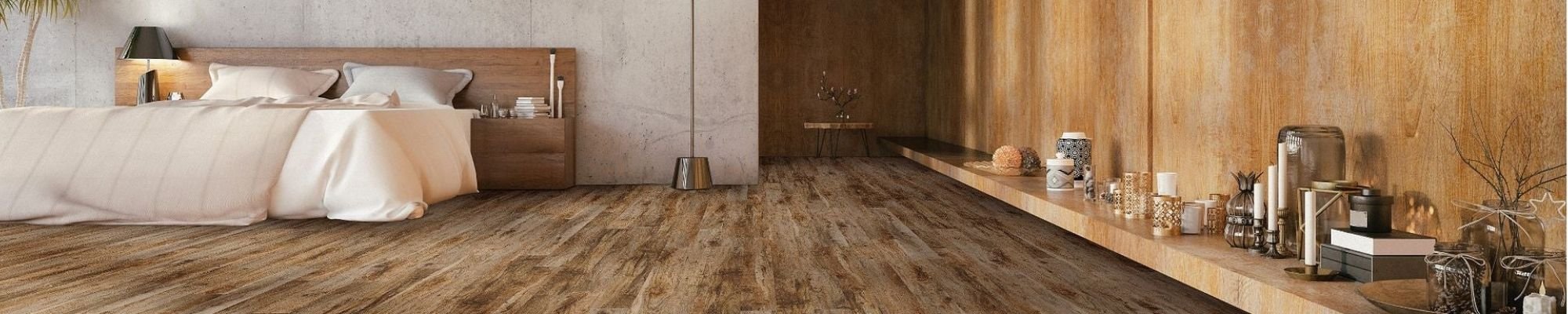
Blog > What Makes a Floor Look Expensive? 8 Design Details That Make All the Difference
What Makes a Floor Look Expensive? 8 Design Details That Make All the Difference
Thursday, August 25, 2026
You can spend more on flooring and still choose a floor that doesn't look quite right.
You can also find a surprisingly affordable floor that makes an entire room look better.
Why?
Because great-looking flooring isn't simply about hardwood versus engineered hardwood versus luxury vinyl.
It's about proportion, color, texture, variation and how the floor works with everything around it.
If you're choosing new flooring, here are eight details worth looking at before you look at the price tag.
1. Look at the Floor, Not One Plank
This may be the most important flooring-shopping advice we can give you.
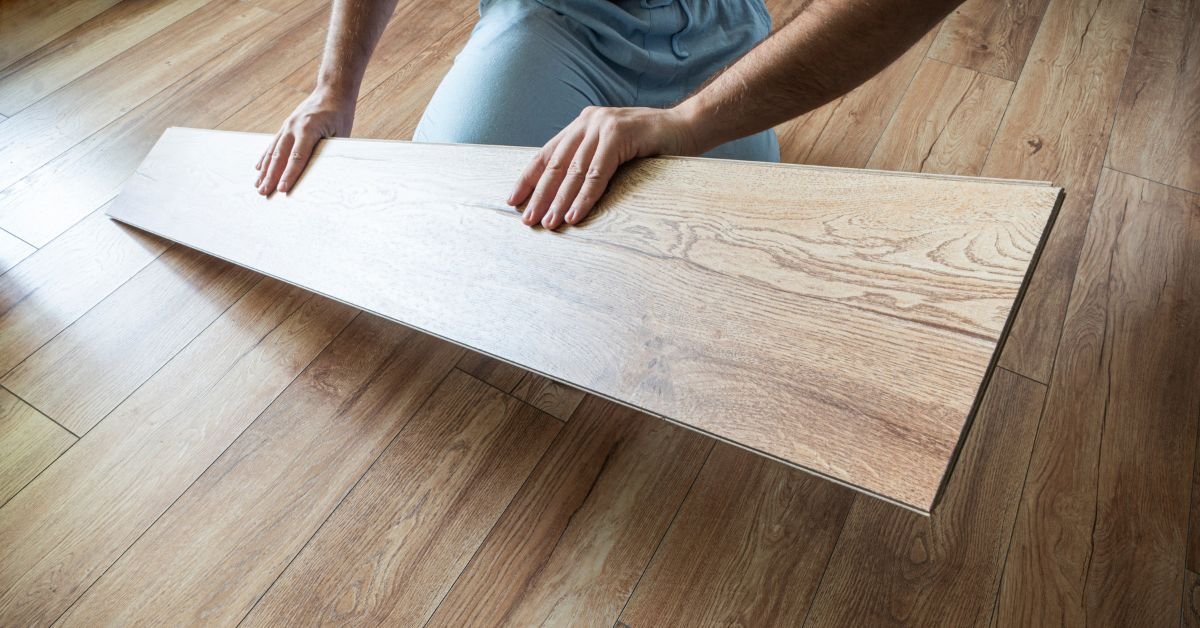
A sample plank tells you what a plank looks like.
It doesn't necessarily tell you what your floor will look like.
This is especially important with wood-look products such as luxury vinyl.
Natural hardwood has inherent variation. Manufactured visuals recreate that variation through different printed plank designs.
The more obvious the pattern repetition, the easier it is for your eye to recognize that you're looking at a manufactured surface.
So step back.
Look at multiple planks together.
Can you immediately spot the same knots?
Do several boards have identical grain?
Does the variation feel random or programmed?
Designer rule: Never judge a wood-look floor by a single plank.
2. Wider Isn't Automatically Better
Wide-plank flooring has dominated interiors for years—and with good reason. Fewer seams can create a cleaner, more expansive visual.
But proportion matters.
Extremely wide planks aren't automatically more luxurious, and they aren't necessarily right for every house.
A traditional home may look beautiful with a somewhat narrower board. A large open-concept space can often carry a dramatic wide plank beautifully.
The goal isn't to choose the trendiest width.
It's to choose the scale that belongs in the room.
3. Watch the Undertone
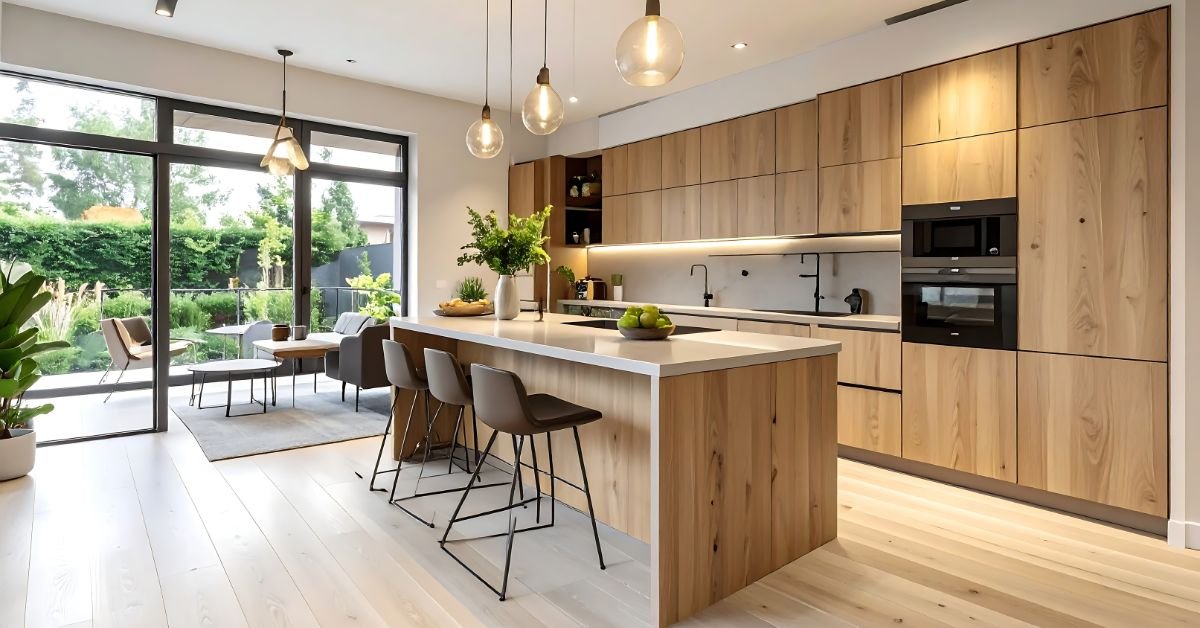
“Light oak” isn't a color.
Put five light oak floors next to one another and you might see yellow, pink, gray, beige and almost-white undertones.
Those subtleties become much more obvious once flooring covers hundreds of square feet.
Before falling in love with a floor, look at what isn't changing:
- Kitchen cabinets
- Countertops
- Fireplace stone
- Trim
- Large furniture pieces
- Adjacent flooring
Your floor doesn't have to match them.
It needs to relate to them.
4. Perfect Can Look Less Real
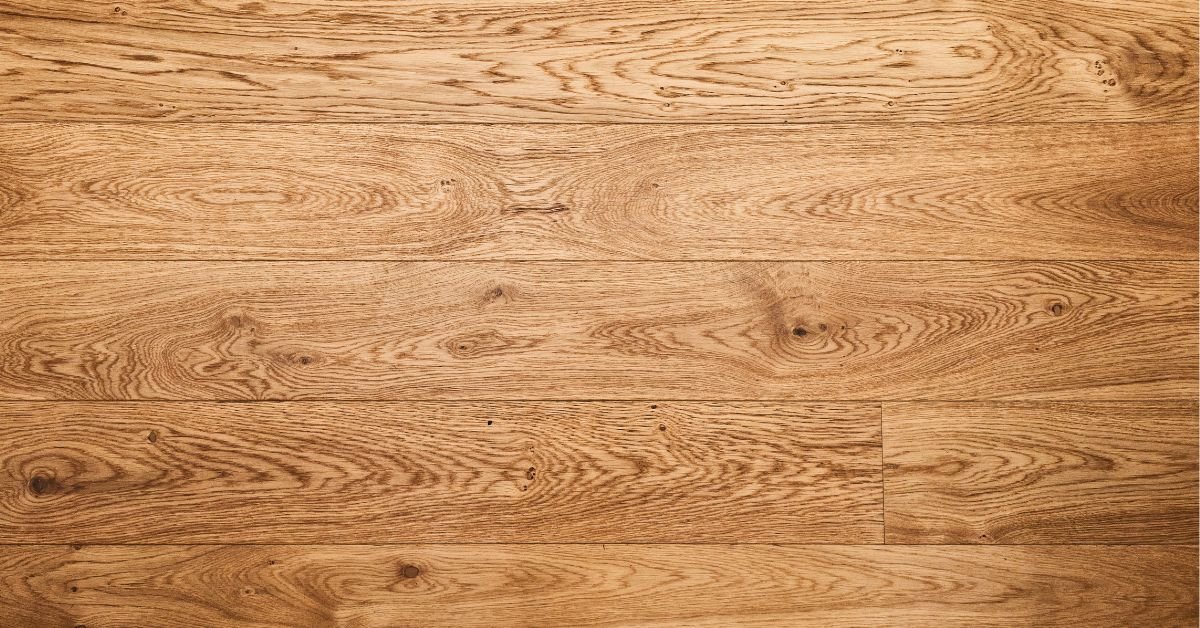
Real trees aren't uniform.
That's part of what makes hardwood beautiful.
Boards may have different grain patterns, mineral streaks, knots and natural color variation depending on the species and grade.
A highly uniform floor creates a clean, controlled aesthetic.
More character creates movement and personality.
Neither is inherently more expensive-looking—but if you're trying to create an authentic natural-wood aesthetic, a little imperfection can be a very good thing.
5. Texture Changes Everything
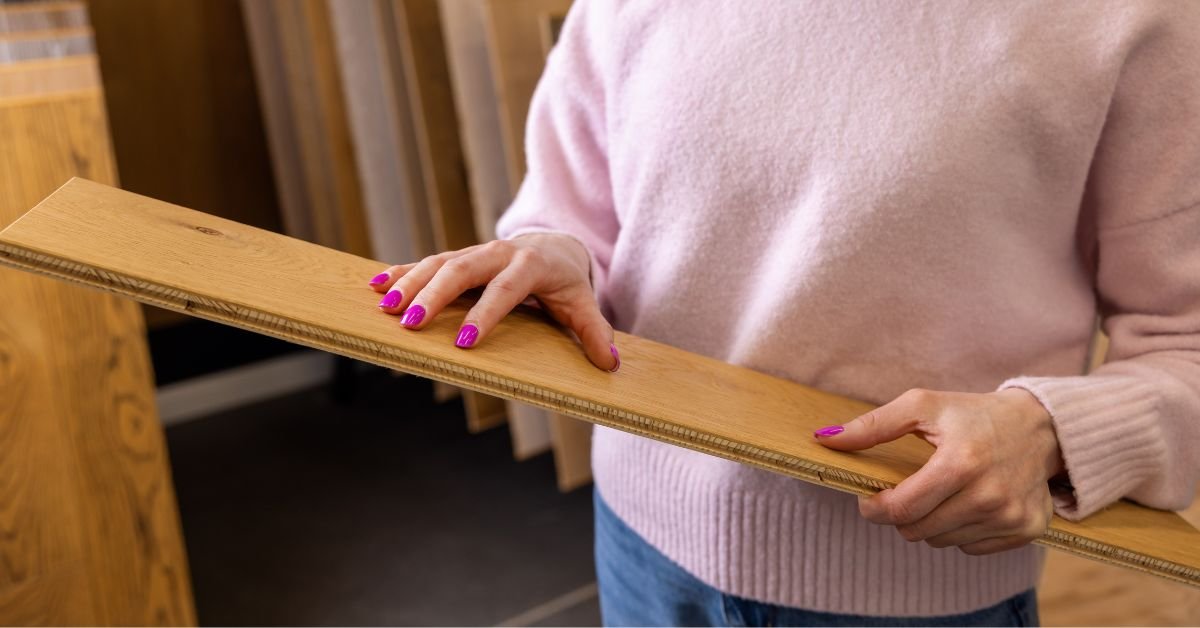
Run your hand across the sample.
A floor's surface texture affects both how it looks and how it lives.
Smooth floors can feel polished and refined.
Wire-brushed textures expose subtle grain and create a relaxed, natural appearance.
Distressed or hand-scraped looks can introduce more rustic character.
Texture can also make everyday wear less visually obvious.
For a busy household, that can be the difference between a floor that needs to look pristine and one that simply gets better-looking as life happens around it.
6. Shine Can Change the Entire Personality of Wood
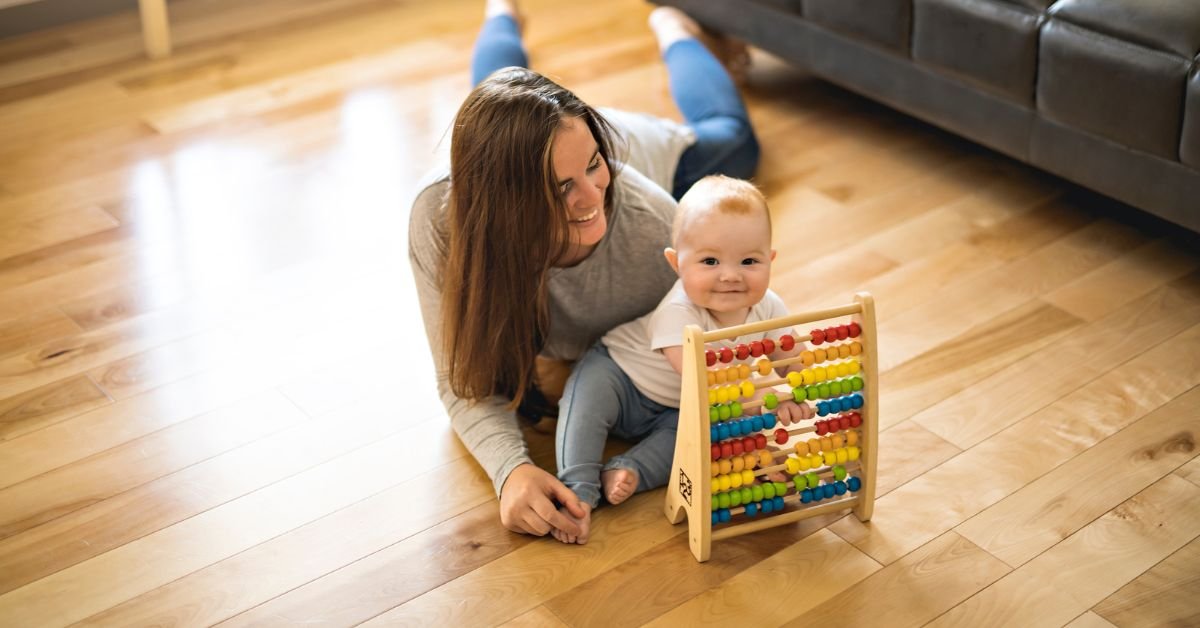
For years, a glossy wood floor signaled “new.”
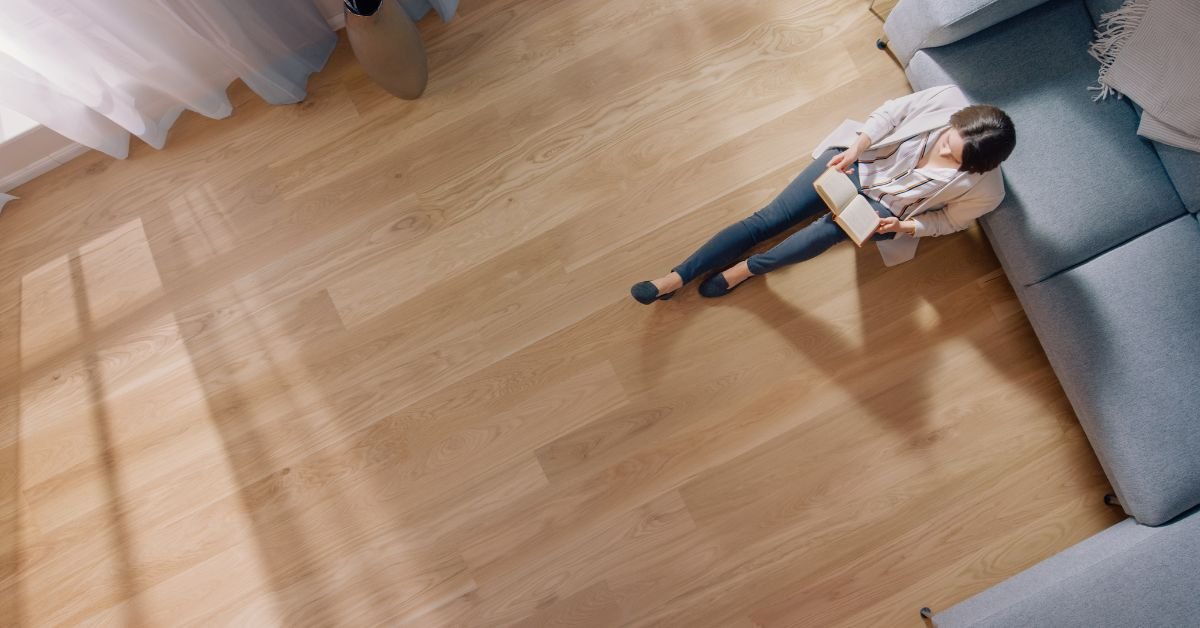
Today, many homeowners are drawn to lower-sheen finishes that allow the grain and color to do more of the talking.
Matte and low-sheen surfaces can feel natural, modern and understated. They can also be forgiving in spaces where footprints, dust and everyday marks are inevitable.
But again, there isn't one correct answer.
A more formal traditional interior and a relaxed contemporary home may call for very different finishes.
Choose the sheen for the room—not the showroom light.
7. Don't Let “Trendy” Become the Design Strategy
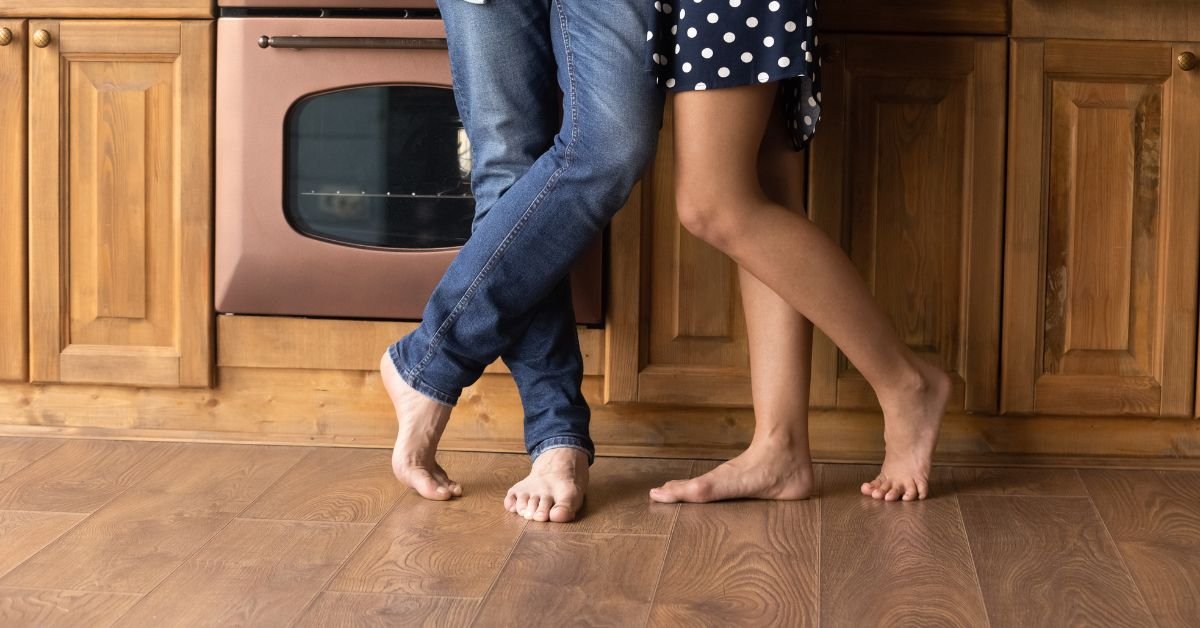
Flooring is a large visual surface.
And unlike a throw pillow, you're probably not changing it next spring.
That doesn't mean your floor has to be boring.
It means there's a difference between current and trendy.
Natural oak tones, warm neutrals, rich browns and character-driven woods can work with many different decorating styles over time.
Extremely specific colors can make a stronger statement—but ask yourself whether you love the floor or simply recognize the trend.
A useful test:
If you hadn't seen this floor all over social media, would you still want it?
If the answer is yes, you're probably onto something.
8. The Best Floor Connects the House
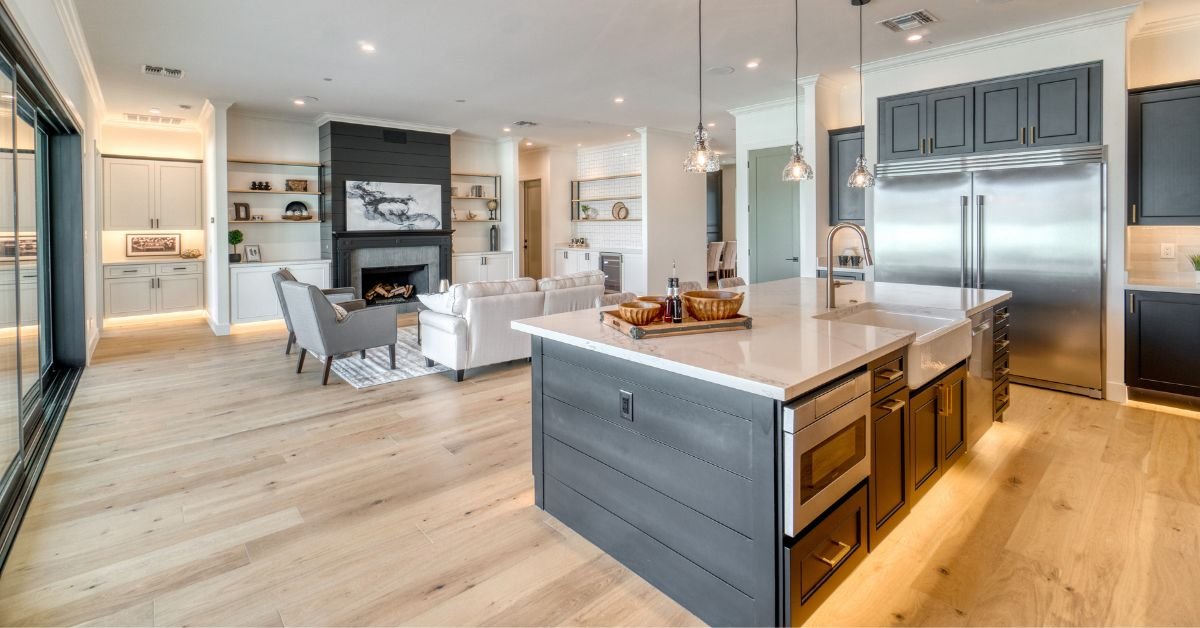
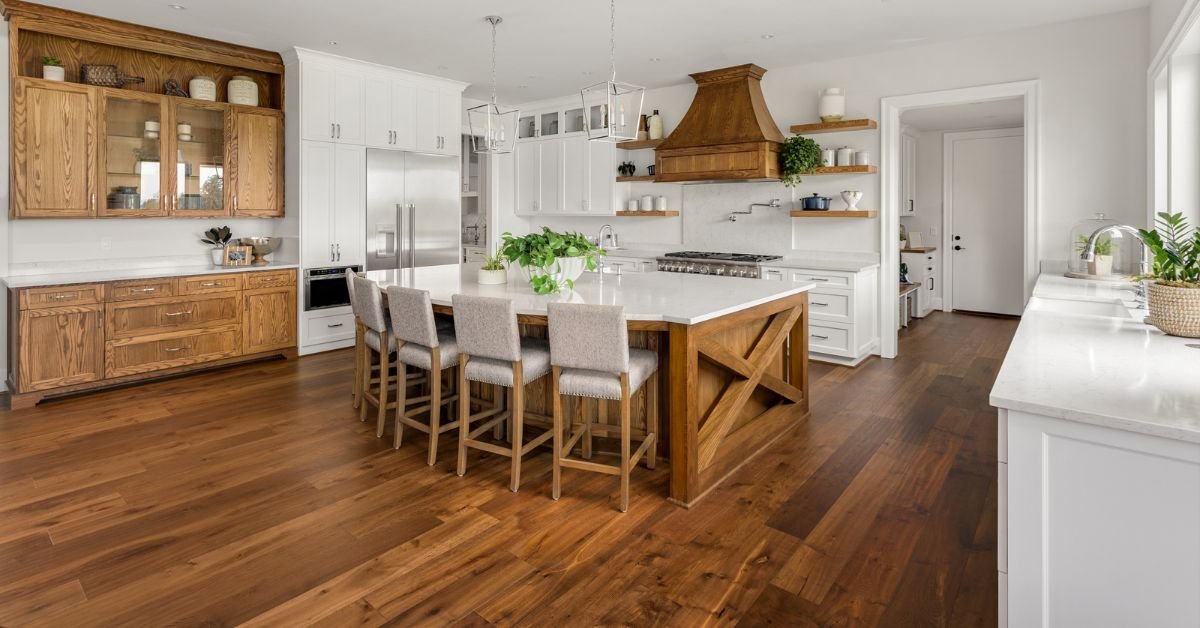
This is especially important in open-concept homes.
Your eye doesn't stop at the edge of the kitchen.
It sees the kitchen, dining room, hallway and living area together.
Every flooring transition creates a visual break. Sometimes that's desirable. Often, fewer transitions create a calmer, larger and more cohesive interior.
That makes performance part of the design conversation.
If one flooring product can work beautifully across more of your home's spaces, you may be able to create greater visual continuity.
This is one reason engineered hardwood and luxury vinyl can be particularly interesting options: depending on the product and installation, they may give homeowners flexibility across areas where another flooring type might be less practical.
Hardwood, Engineered Hardwood or LVP: Which Looks Most Expensive?
There's no automatic answer.
Solid hardwood offers the authenticity and natural variation that can only come from real wood.
Engineered hardwood gives you that same real-wood surface with a different construction beneath it.
Premium luxury vinyl can deliver remarkably convincing wood visuals while adding performance advantages that real wood can't always offer.
A beautiful floor isn't beautiful because of the category printed on the box.
It's beautiful because the color, scale, texture, variation and quality are right for the space.
The One Flooring Decision We'd Never Make Online
Color.
Your phone, tablet and monitor aren't your room.
Lighting changes flooring dramatically. So do paint colors, cabinets and surrounding materials. And a tiny digital swatch can't show you the variation you'll see across an entire floor.
Online research is a great place to narrow the field.
Then come see it.
At Floors USA's 40,000-square-foot King of Prussia showroom, you can compare flooring styles, colors, constructions and price points side by side—and see the differences that simply don't show up on a screen.
Bring your photos, samples and ideas.
We'll help you put the whole room together.
Floors USA. It's Worth the Trip.